


The Panamanian cédula is the national identity card used for almost everything in daily life in Panama, from opening a bank account to signing a lease or a contract. For foreigners, the version of this document is the E-cédula, an official Panama ID card available once you hold permanent residency.
This guide explains what the cédula is, the Panama cédula requirements that apply to foreigners, how it differs from the residency card issued by immigration, and how expats in Panama apply for it at the Tribunal Electoral.
What Is a Cédula in Panama?
A cédula in Panama is the official identification card issued by the Tribunal Electoral, the same institution that manages the civil registry. Every Panamanian citizen over 18 must carry one, and its unique number follows the holder for life. That number is requested constantly: by banks, notaries, utility companies, clinics and government offices.
The Panamanian Cédula as the National ID Card
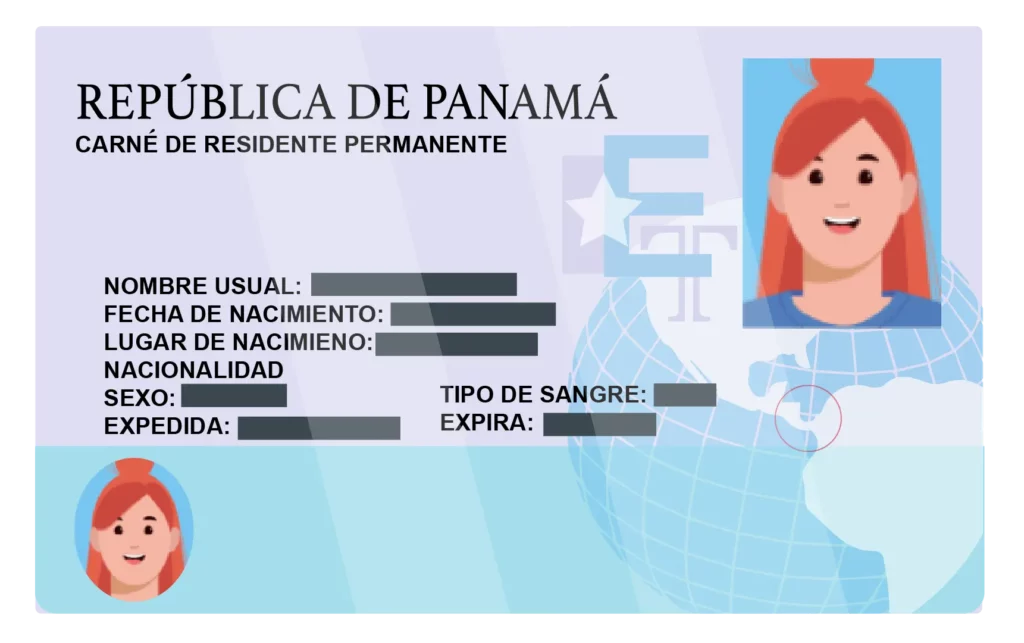
The Panamanian cédula displays the holder’s full name, photograph, date and place of birth, blood type, signature and identity number. Because it is the standard proof of identity nationwide, holding one dramatically simplifies administrative, legal and business procedures. For foreigners who settle in the country, obtaining the equivalent card is one of the most practical benefits of permanent residency.
What the E in E-Cédula Means
The identity card issued to foreign permanent residents is known as the E-cédula. The letter E stands for extranjero, the Spanish word for foreigner. It identifies the holder as a non-Panamanian who is legally domiciled in Panama with permanent resident status. In English, you can think of the E-cédula simply as the Panamanian ID card for foreign residents.
What the Letters on Panamanian ID Cards Mean
Clients often ask us what the letters and numbers on a cédula mean. Panamanians by birth carry no letter: their number starts with the key of the province where their birth was registered, followed by the volume and entry in the civil registry. The letter E identifies foreigners legally domiciled in Panama. The letter N identifies naturalized Panamanians. PE identifies Panamanians born abroad and adopted by Panamanian nationals, and PI identifies members of Panama’s indigenous population

Panama Cédula Requirements for Foreigners
The single most important rule is this: only foreigners who already hold permanent residency in Panama can apply for the E-cédula. The card is not a visa and it does not grant immigration status by itself. It is an identity document issued after your status has been approved by the National Immigration Service.
Panama Permanent Residency Requirements Before You Apply
Before the cédula card is ever on the table, you must qualify for permanent residency. While each immigration program has its own file, the core Panama permanent residency requirements generally include a valid passport with at least six months of validity, a recent certificate of good conduct from your country of origin issued within the last six months, proof of the economic ties or investment required by your chosen program, and a complete application filed through a Panamanian attorney. Some programs, such as the Qualified Investor Visa, grant permanent residency directly through an investment starting at USD 300,000 in Panamanian real estate or an approved financial instrument. Others grant provisional residency first and permanent residency at a later stage.
Documents Needed for the E-Cédula Application
Once your permanent residency is approved, the E-cédula file is short. You will need the cédula letter, an authorization issued by the National Immigration Service confirming your right to request the card, together with copies of your permanent resident card and your passport. The cédula letter has a limited validity period, so we recommend requesting your appointment at the Tribunal Electoral without unnecessary delay.

Becoming a Resident in Panama: Pathways to a Permanent Resident Card
Becoming a resident in Panama is the real project; the cédula is the reward at the end of it. Panama offers some of the most accessible residency programs in the region, and each one leads to the permanent resident card that makes you eligible for the E-cédula.
Residency Visas That Lead to Permanent Residency
The most common routes our clients use include the Friendly Nations Visa, for citizens of the more than 50 countries that maintain friendly relations with Panama who can demonstrate economic or professional ties; the Qualified Investor Visa, often called the Panama Golden Visa, which grants permanent residency through investment; the Pensionado Visa, for retirees with a verifiable lifetime pension; and the Panama and Italy Treaty Visa, available to Italian citizens under a bilateral agreement. Residency by marriage to a Panamanian citizen and residency as a dependent of a permanent resident are also frequent paths. Choosing the right program depends on your nationality, your income structure and your plans in Panama, which is where legal guidance saves the most time.
Is the Panama Permanent Resident Card a Green Card?
Many US readers describe the permanent resident card as a Panama green card, and the comparison is fair. Like a green card, it allows you to live in the country indefinitely, work for local employers where your category permits it, own property and re-enter the country freely. Unlike temporary permits, it does not require constant renewals. Keep in mind that permanent residency can be suspended if you remain outside Panama for a prolonged period, so residents who travel extensively should plan their absences with their attorney.
Panama Residency Card vs E-Cédula: What Is the Difference?
This is the question we hear most often from expats in Panama, and the distinction matters. Permanent residency and the E-cédula are two separate things issued by two separate institutions. Residency is your immigration status. The E-cédula is an identification card available to those who already have that status. The E-cédula is not a residency status by itself.
The Carné de Residente Issued by Immigration
When your residency is approved, the National Immigration Service issues a residency card known as the carné de residente. It shows your photo, your immigration category and, for permanent residents, an indefinite validity. However, the carné is not a standalone identity document. In practice, banks and public offices will ask foreigners to present it together with a passport. That is precisely the inconvenience the E-cédula eliminates.
Do All Expats in Panama Need an E-Cédula?
No. The E-cédula is optional, and many expats live in Panama for years using their residency card and passport. Retirees under the Pensionado program, for example, can reside in the country indefinitely without ever requesting one. That said, if you bank, rent, drive and sign contracts in Panama, the E-cédula quickly pays for itself. It is accepted on its own as proof of identity anywhere in the country, it lets you leave your passport safely at home, and for many of our clients it also carries symbolic weight: it is the document that says you are no longer just visiting.
How to Apply for the E-Cédula at the Tribunal Electoral
The application is completed in person before the Tribunal Electoral in Panama City. It is a short and predictable process when the file is prepared correctly.
Step-by-Step Application Process
First, confirm that your permanent residency is fully approved and request the cédula letter from the National Immigration Service. Second, gather the supporting copies of your permanent resident card and passport. Third, schedule an appointment at the Tribunal Electoral, attend in person, verify your personal data and have your photograph taken. Finally, return to collect your E-cédula once it is printed. Your presence is required at the appointment, since the Tribunal verifies your identity and captures your image on site.
E-Cédula Cost and Processing Time
The Tribunal Electoral charges an application fee of approximately USD 100, with a reduced fee for retirees. Once your data is captured, the card is usually ready within 7 to 15 business days. Measured from the start of a residency application, the full journey from visa filing to holding your E-cédula typically spans around six months, depending on the immigration program.
Renewing or Replacing Your Panamanian Cédula
Like any identity document, the E-cédula has an expiration date and can be lost or stolen. Both situations have a defined procedure.
I Lost My Panamanian Cédula, Now What?
If your cédula is lost or stolen, report the loss to the Tribunal Electoral or the police and request a replacement, presenting the report and your identification documents. Foreign residents should also make sure their permanent residency status is current before requesting the duplicate, since the replacement is issued against your civil registry record.
Where to Renew an E-Cédula
Renewals of E cédulas must be completed in Panama before the Tribunal Electoral. Panamanian consulates abroad can renew citizen cédulas in some jurisdictions, but they are not authorized to renew cards beginning with the letter E. If you spend long periods outside the country, plan your renewal around a trip to Panama.
Get Your Panamanian Cédula with NDM Law Firm
At NDM Law Firm we guide expats in Panama through the entire journey: selecting the right residency program, securing the permanent resident card, and completing the E-cédula application before the Tribunal Electoral without errors or repeated visits.
Legal Support for Expats in Panama
Our immigration team prepares your file, verifies every document against current Panamanian immigration law, obtains the cédula letter and accompanies you through the appointment. If you are ready to turn your residency into a Panamanian cédula, contact our lawyers today and request a consultation.
